Lipa was once richer than most of Manila
Lipa barako coffee heritage is deeply tied to the city’s identity as the former Coffee Capital of the Philippines. Before Lipa became a quiet modern city, it was known for its powerful Batangas barako coffee industry in the 1800s. Today, that same Lipa barako coffee heritage lives on through cafés, local markets, and stories of old plantations that once made the town one of the richest in the country.
The history of barako in Lipa is the kind of story that most travel blogs skip because it doesn’t fit a 5-minute itinerary. But it’s the reason Lipa feels the way it feels. The slow pace, the cafes, the old houses, the local pride in Café de Lipa — all of it traces back to one bean. Lipa barako coffee heritage continues to attract travelers who want to experience traditional Filipino coffee culture.
This is the story, told honestly, and the practical guide on where to drink Lipa barako today.
What “barako” actually is
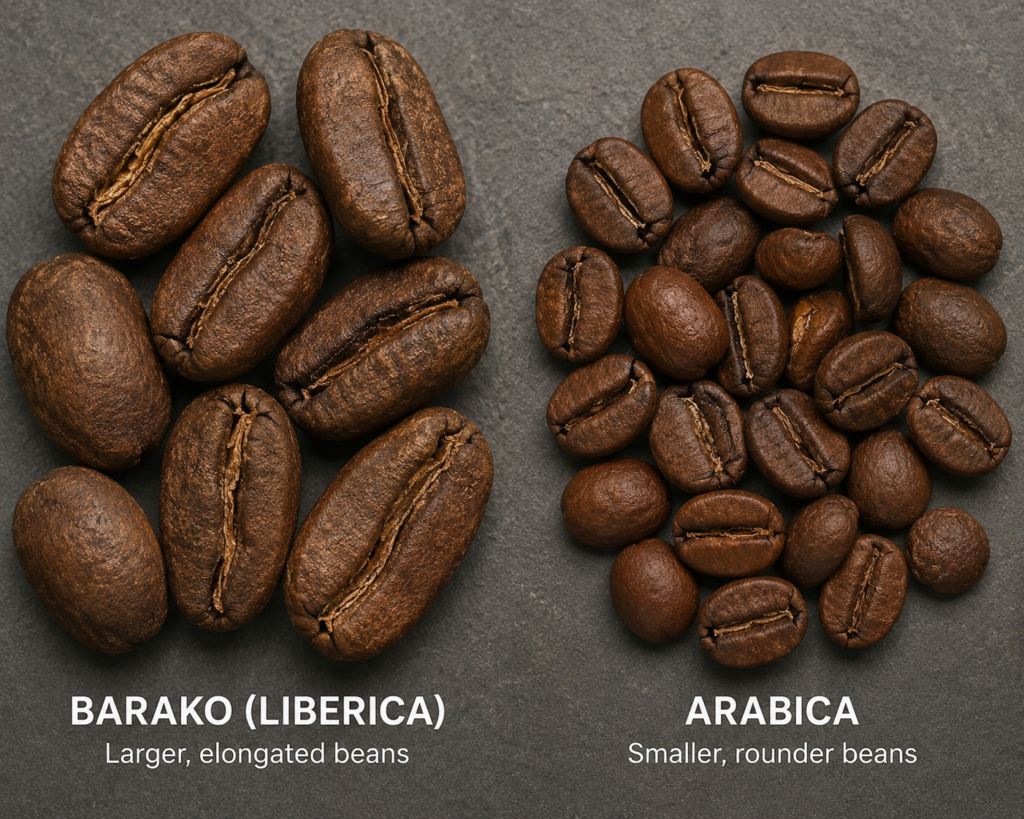
Kapeng barako is the local name for Coffea liberica, one of the four main coffee species commercially grown in the world (the others are Arabica, Robusta, and Excelsa). Liberica is rarer than Arabica or Robusta, which means barako is a niche product globally — but it’s also why Filipino barako is genuinely distinctive on a world coffee map.
The flavor is bold, woody, and slightly smoky. Lower in acidity than Arabica. Stronger body than Robusta. It’s traditionally drunk black, with a small sugar, often at breakfast. Locals will tell you barako pairs with pandesal, kakanin, and tapsilog — and they’re right.
“Barako” literally translates to “stud” or “wild boar” in Tagalog. The name is a flex. The coffee is supposed to be strong, masculine, and not for the faint of heart. Modern third-wave cafes have softened that image — barako lattes exist now — but the original drink is meant to wake you up.
How Lipa became the Coffee Capital
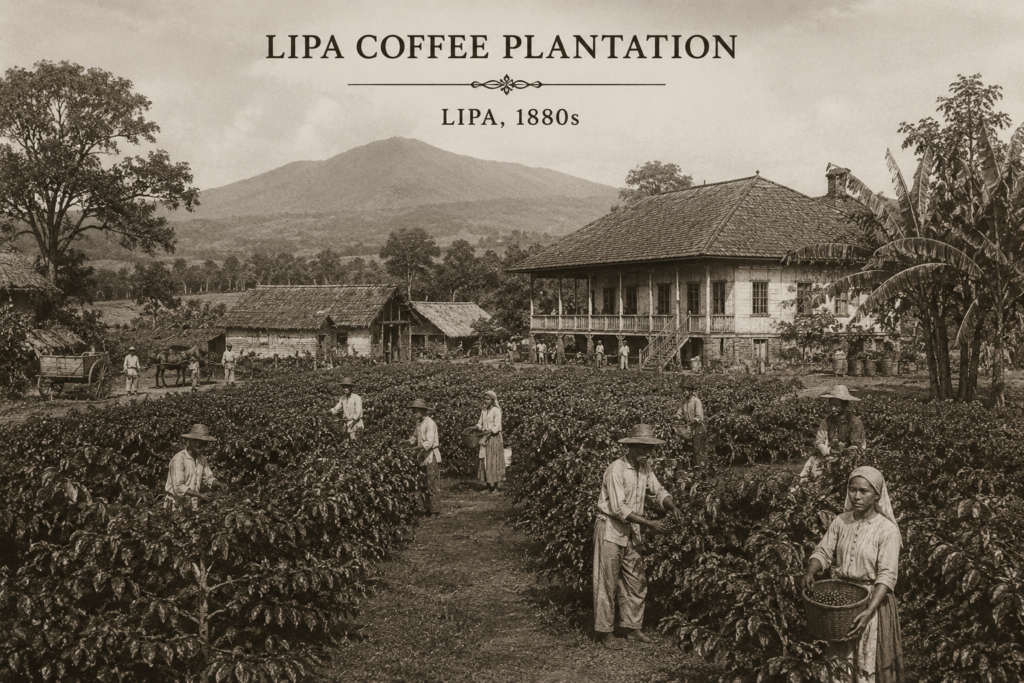
A brief, honest version of the history:
1740s — Coffee arrives in the Philippines. Spanish friars and traders bring coffee seedlings, initially to Mindanao and later to Batangas. The mountainous, volcanic soil around Lipa and the surrounding Batangas towns (Sariaya, Tiaong, Tanauan) turns out to be ideal — well-drained, rich, at a comfortable elevation.
Early 1800s — Lipa scales up. Local families start growing coffee commercially. The Batangas climate suits Liberica especially well, and the bean develops a reputation as a strong, distinctive coffee on the export market.
1860s–1880s — The peak. A devastating coffee leaf rust epidemic destroys coffee crops in Brazil, Ceylon (Sri Lanka), and Java in the 1860s–1870s. Suddenly, the Philippines becomes one of the world’s leading coffee exporters by default. Lipa is the heart of it. The town grows wealthy. Families build mansions. The Spanish colonial government elevates Lipa to a villa (chartered town) in 1887 — a significant administrative status reflecting its prosperity.
1889 — The crash. Coffee leaf rust finally reaches the Philippines. The disease devastates Lipa’s plantations within a few years. By the early 1890s, the export industry has collapsed. Lipa never fully recovers its coffee-based economy.
1900s — Slow rebuilding. Some farmers replant, but mostly with hardier Liberica varieties that survive but don’t reach the export volumes of the peak. Most of Batangas shifts toward sugar, fruits, and other crops. The coffee that remains becomes a local heritage product rather than a global export.
Today — Heritage, not commodity. Barako is grown in modest volumes around Batangas (and Cavite, the other historic barako region). It’s a specialty product, a local pride, and increasingly a third-wave-cafe ingredient — but it’s no longer the economic engine it once was.
That’s the short version. What’s worth understanding is that Lipa’s wealth, architecture, and slow-paced confidence weren’t built on tourism or sugar. They were built on coffee. And the coffee culture you’ll experience today is the heritage of that century, not a manufactured tourist hook.
Where to drink real Lipa barako today
A few spots, in order of how much they lean into the heritage:
Café de Lipa — the heritage anchor
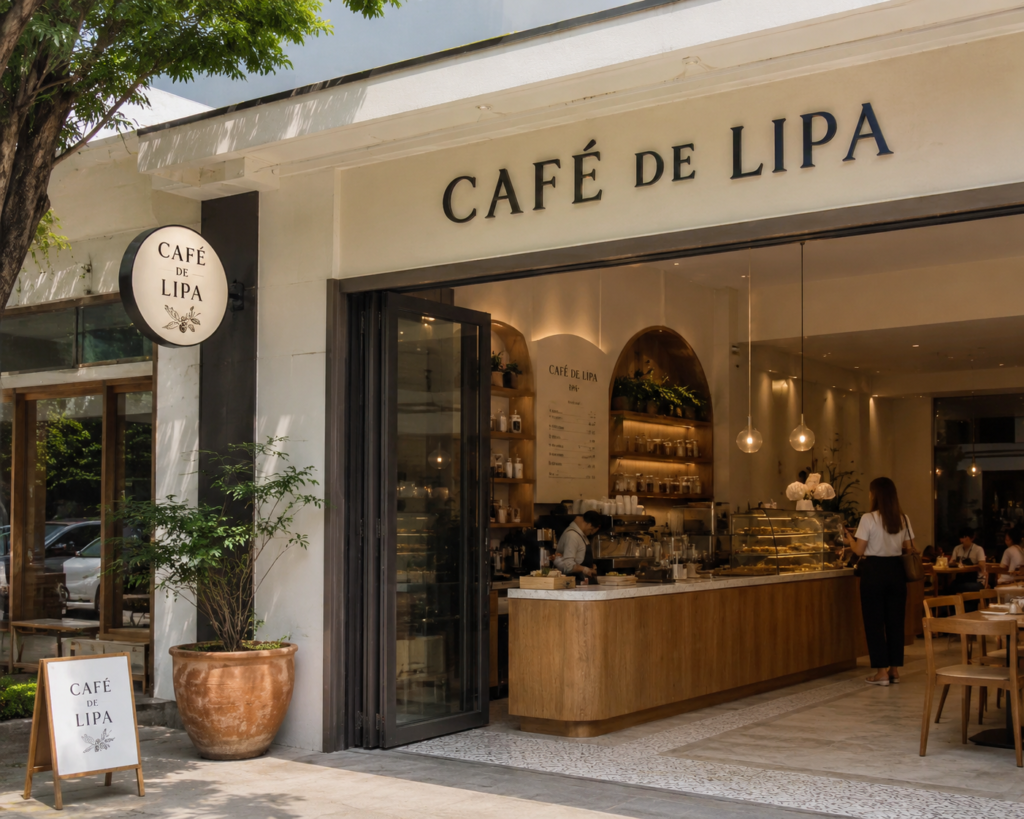
Café de Lipa is the brand that has done the most to keep Lipa’s coffee identity visible. It’s not the oldest cafe in Lipa, but it’s the most consistent: the barako is reliably good, the branding is rooted in local history, and the bean-bags you take home make the best pasalubong of any in the city.
Order the barako black if you want the original. Order it with a small sugar and a piece of pandesal if you want the breakfast-in-Lipa-in-1890 experience. They also do barako lattes, cold brews, and seasonal drinks — all of which are good, but the unadorned black cup is the one to start with.
There are multiple Café de Lipa branches in Lipa and surrounding cities. The flagship in Lipa is the one to visit.
Specialty third-wave cafes around Mataas na Lupa and downtown Lipa
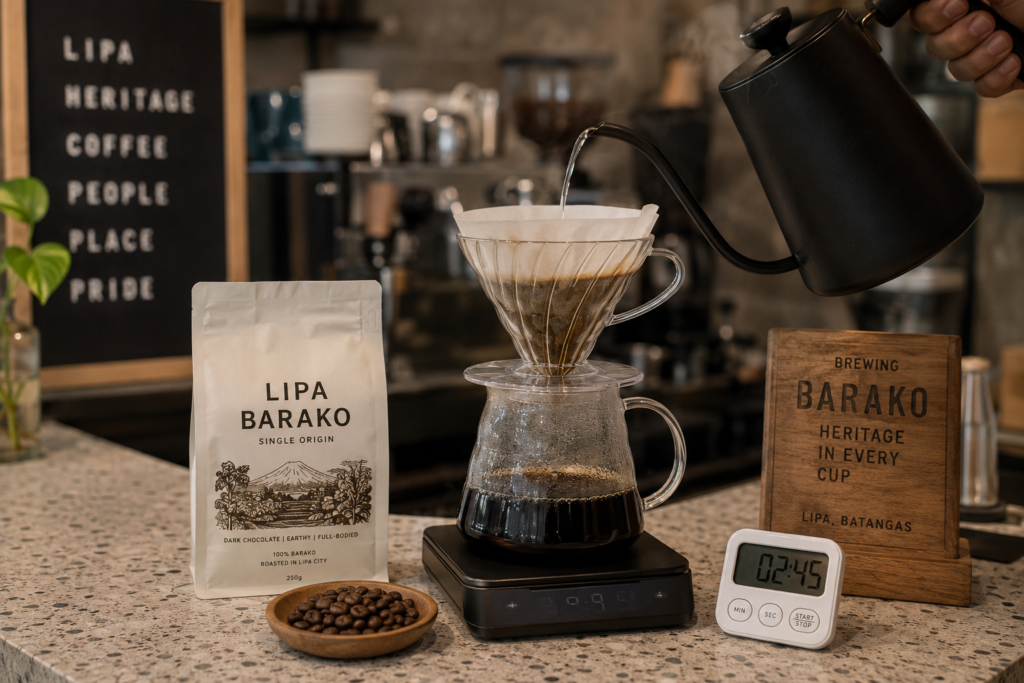
A new generation of cafes around the Mataas na Lupa neighborhood and the downtown commercial strip have started featuring single-origin Batangas barako alongside the usual Arabica blends. These are the cafes where you’ll see pour-over setups, V60 cones, and baristas who can actually talk you through the tasting notes of a local bean.
Names change — third-wave cafes open and close more than heritage spots — so ask your rental host for the current best of the bunch, or check the best restaurants and cafes guide for our current short list.
Lipa public market and roadside karinderyas
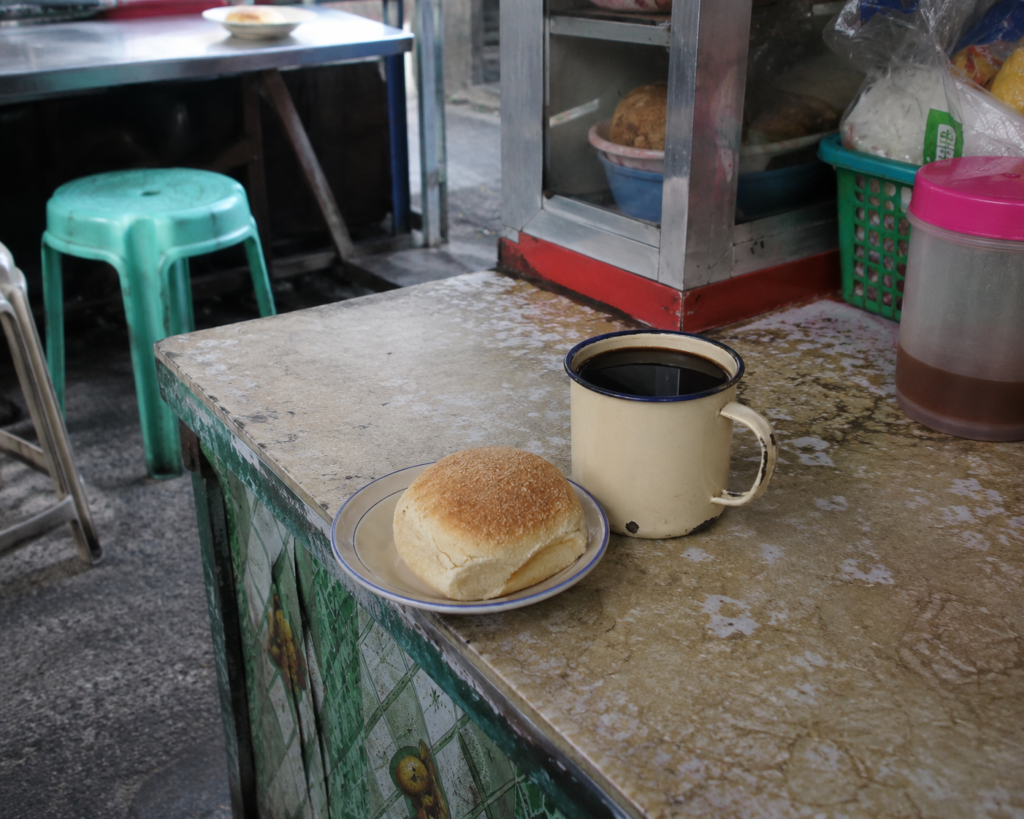
The most local way to drink barako: a hole-in-the-wall karinderya near the Lipa public market, an enamel mug of strong black coffee for ₱20–₱30, and a piece of pandesal on the side. No latte art. No specialty menu. Just the coffee that Lipa was drinking when it was the richest town in the country.
Ask anyone selling barako beans at the market for a “kopi” — most stalls have a kettle going.
Local farm visits (advance booking required)
A small number of Batangas coffee farms run by independent farmers offer farm tours, bean-roasting demos, and direct-purchase opportunities. These are not formal tourist operations — they’re working farms that occasionally accept visitors. Availability changes seasonally and the smaller farms only respond on Facebook Messenger.
If you’re a serious coffee traveler, ask your host for a current contact two weeks before your trip. We’ve connected a few guests to local roasters and farmers; we can usually do the same if there’s enough notice.
A heritage-coffee day plan
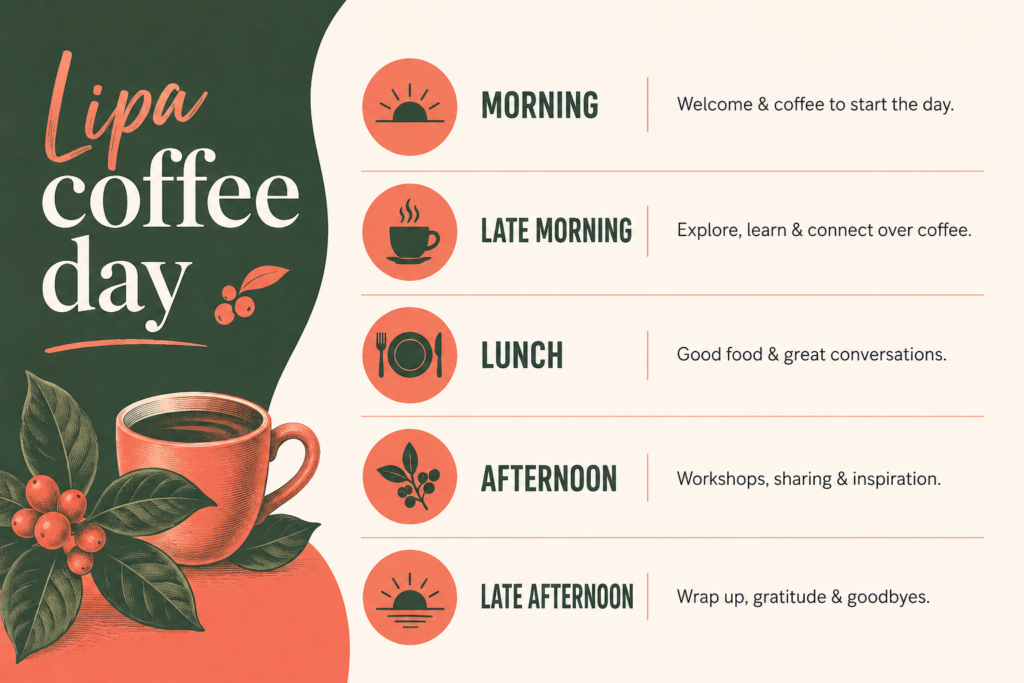
For travelers who want to do a “Lipa coffee day” — half-day or full day:
Morning (8 to 11 AM)
- Start with a black barako at Café de Lipa
- Walk to the Lipa public market, browse the pasalubong stalls, sample whichever vendors offer it
- Buy two bags: one Café de Lipa branded for the souvenir-quality packaging, one unbranded from a market vendor for the everyday-drinking version
Late morning (11 AM to 12:30 PM)
- Walk to one of the third-wave cafes in the downtown or Mataas na Lupa area
- Order a pour-over of single-origin Batangas barako, plus a flat white for contrast
- This is where you’ll taste the difference between heritage barako (rustic, smoky) and specialty barako (cleaner, brighter, more nuanced)
Lunch (12:30 to 2 PM)
- Casa Marikit or a Batangas-cuisine restaurant — pair the meal with iced coffee or another barako
- Filipino food + Filipino coffee is the point
Afternoon (2 to 4 PM)
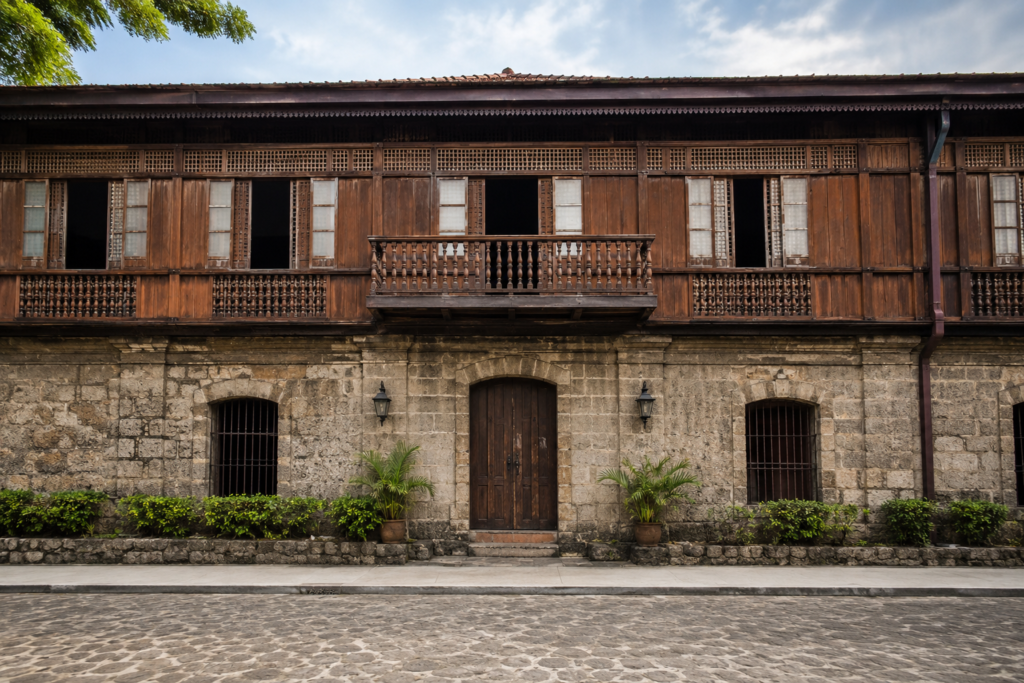
- Visit Casa de Segunda — the heritage house gives you the visual context for the wealth Lipa had during the coffee boom
- The wooden floors and capiz windows you’ll walk through are the architecture coffee paid for
Late afternoon (4 to 6 PM)
- Slow coffee at your rental, beans you bought in the morning
- Brew at the unit; honestly the best cup of the day
What to bring home
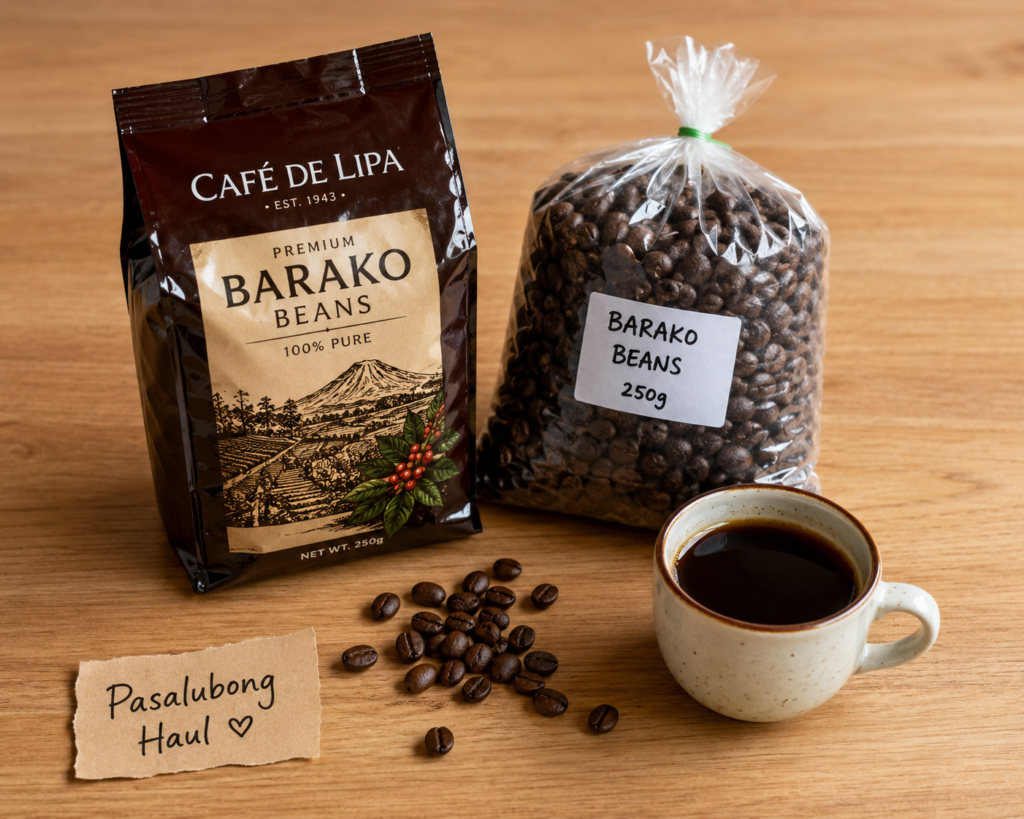
If you’re going to take Lipa barako back to Manila or further, a few practical notes:
- Buy whole bean if you can. Pre-ground loses character fast.
- Keep it sealed and dry. Manila humidity is the enemy.
- Ask about roast date. Fresh-roasted barako (within 2 weeks) is dramatically better than stale supermarket bean.
- Café de Lipa packaging makes a good gift. Their branded bags are the souvenir-quality option.
- Try brewing it different ways. A French press brings out the body. A V60 brings out the cleaner notes. An old-school sock-strainer (kapeng barako traditional method) gives you the heritage version.
A 250g bag of good Lipa barako typically runs ₱250–₱400 depending on brand and roast. That’s about half what you’d pay for equivalent quality from a Manila specialty roaster.
Why this matters beyond a cup of coffee
The reason Lipa feels different from Tagaytay isn’t just the elevation or the lack of traffic. It’s that Lipa has a story it was telling itself long before it became a getaway destination. The cathedral, the heritage houses, the cafes, the public market, even the family-run restaurants — all of it sits on a foundation laid in the 1800s when coffee made this town wealthy.
For us at HavenInLipa, the coffee heritage is a small part of why we host here. We get to recommend cafes that aren’t on the typical tourist radar. We get to send guests home with bags of beans they’ll remember the trip by. And we get to keep telling a story that’s bigger than a weekend.
Common barako questions
Is Lipa barako better than Tagaytay or Batangas barako?
“Lipa barako” and “Batangas barako” are essentially the same thing — Lipa is the historic capital of the Batangas barako region. Tagaytay barako is technically Cavite barako, which is the other historic Liberica region. Both are good. The Lipa side has the heritage story.
How strong is barako compared to a regular Arabica?
Stronger in body, lower in acidity. The caffeine content is slightly higher than Arabica but comparable to Robusta. If you’re sensitive to coffee, start with a half-cup.
Can I find Lipa barako in Manila?
Yes — Café de Lipa has Manila branches, and many specialty coffee shops carry Batangas barako single-origin. But the fresh-roasted, direct-from-Lipa version is meaningfully better than what travels to Manila supermarkets.
Is there a Lipa coffee festival?
The Coffee Festival of Batangas (Kapeng Barako Festival) is held periodically, typically associated with broader Batangas regional events rather than a fixed annual Lipa-only festival. Dates shift; check the Batangas Tourism page or Café de Lipa’s social media for the current year’s calendar.
Where can I learn more about Filipino coffee history?
The Philippine Coffee Board and the SEARCA agricultural research center have published the most reliable academic-level histories. For a casual read, Café de Lipa’s branding pamphlets (free at their flagship store) give a solid one-page version.
Ready to plan your Lipa trip?
We’ve got five places to stay in Lipa — all bookable direct, no Airbnb fees:
Just the two of you, or a small family
- 👫 Cozy 1BR — sleeps up to 5, solar backup during brownouts, from ₱1,500/night
Family or barkada trip
- 👨👩👧👦 Spacious 2BR — sleeps up to 9, from ₱2,800/night
- 🏰 Mickey in Lipa — Family Staycation — Disney-themed, sleeps up to 7, from P2,500/night
Big group or multi-family getaway
- 🏰 Mickey in Lipa — Family House — sleeps up to 11, from ₱4,500/night
- 🏰 Mickey in Lipa — Full Family House — sleeps up to 15, from ₱6,500/night
💸 Booking direct saves you 15–20% vs. Airbnb — here’s why
Message Melody directly if you want help arranging a small-farm visit or a heritage coffee day during your stay — we know the right people locally, and most of it isn’t on Google.